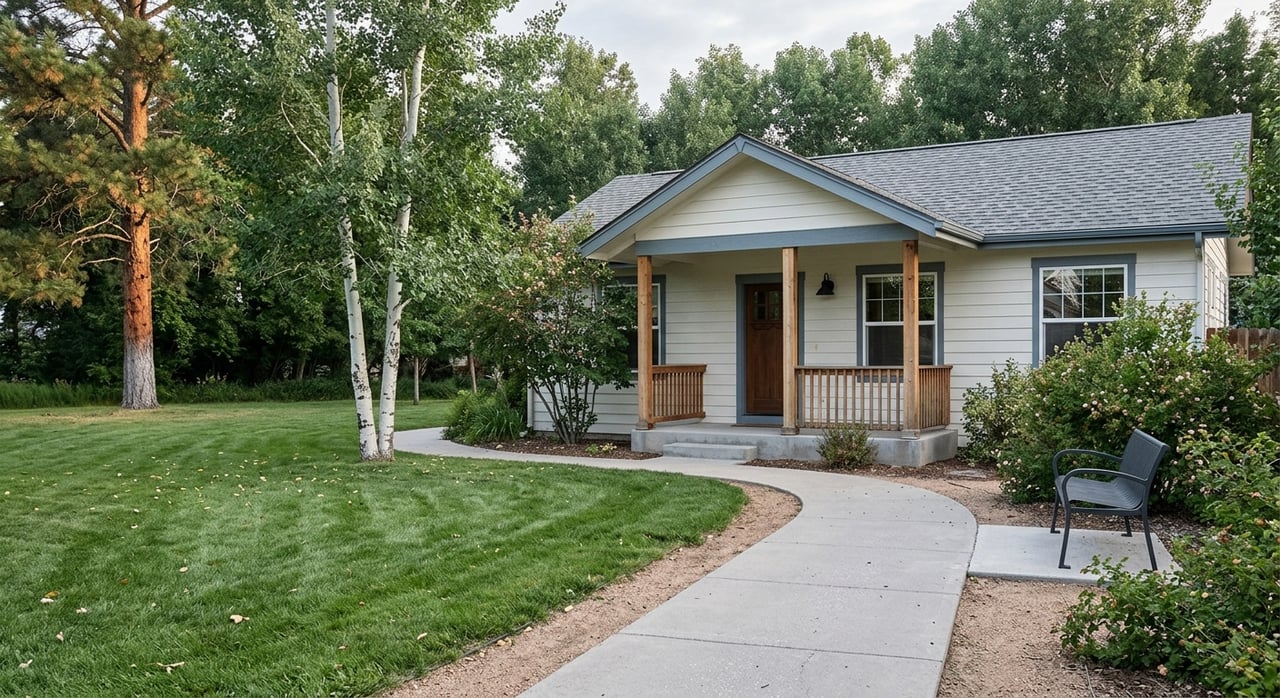
Saving for a down payment can feel like the hardest part of buying a home. If you live or work in Quincy, you might be wondering how to get help without overcomplicating your loan. You are not alone. Many first-time and budget-focused buyers in Grant County use down payment assistance to get the keys faster and keep more cash for moving and repairs.
In this guide, you will learn how Washington programs work, which options fit Quincy’s rural setting, and the steps local lenders use to pre-approve you. You will also get a quick Spanish summary and a checklist you can start today. Let’s dive in.
Why down payment help matters in Quincy
Quincy sits in a rural, agriculture-driven part of Grant County. Compared to larger metro areas, many buyers here look for practical ways to lower upfront costs and keep payments steady. Because much of Grant County is rural, some homes may be eligible for zero-down USDA financing, which can remove the need for a traditional down payment altogether.
Down payment assistance, or DPA, can bridge the gap between what you have saved and what you need to close. It can also help with closing costs, which is a common hurdle for first-time buyers.
Top programs for Quincy buyers
Washington State Housing Finance Commission (WSHFC)
The Washington State Housing Finance Commission is the state’s main source for first-time and income-qualified buyer loans paired with down payment assistance. WSHFC typically offers a first mortgage that you take out with a participating lender plus a companion DPA that may be a deferred second loan or a grant. Programs usually have income and purchase-price limits by county and require a homebuyer education class.
USDA Rural Development loans
Many parts of Grant County may qualify for USDA financing. There are two main types for homebuyers:
- USDA Guaranteed Loans: Offered by private lenders with a USDA guarantee and often zero down for eligible buyers and properties. See details on USDA guaranteed loans.
- USDA Direct Loans: Loans directly from USDA for very low- to low-income buyers. Learn more about USDA direct loans.
To check if a Quincy address is eligible, use the USDA property eligibility map. Income limits also apply and vary by household size.
FHA and VA basics
- FHA: FHA-backed loans require a small down payment and allow flexible credit standards. Many DPA sources can be layered with FHA, subject to program rules. Review the FHA overview at HUD’s FHA loan page.
- VA: Eligible veterans, service members, and some surviving spouses may qualify for zero-down VA loans. See eligibility details at VA home loans.
Conventional low-down options
Conventional mortgages also offer low-down choices that can pair with DPA.
- Fannie Mae HomeReady: 3 percent down, income limits apply, and reduced mortgage insurance for some buyers. Explore Fannie Mae HomeReady.
- Freddie Mac Home Possible: 3 percent down with flexible underwriting for qualified buyers. Learn about Freddie Mac Home Possible.
Your lender can help you compare these options and confirm which ones can be combined with WSHFC assistance.
How down payment assistance works
DPA usually comes in one of these forms:
- Second mortgage: Often deferred or low interest, sometimes forgivable over time.
- Grant: Funds applied to the down payment or closing costs that may not need to be repaid.
- Closing-cost help: Targeted assistance toward settlement expenses.
- Lender credits or buydowns: Applied to interest rate or closing costs, which can reduce payment instead of down payment.
Layering rules
Programs have specific rules about what can be combined. WSHFC assistance typically pairs with its own first mortgage products through approved lenders. FHA and VA may allow certain DPA sources. USDA does not offer stand-alone DPA, but guaranteed and direct loans can sometimes be combined with closing-cost help or seller concessions. Always confirm with your lender and the program administrator.
Typical caps and eligibility basics
- First-time buyer: Often defined as no ownership in the past three years. Some exceptions exist.
- Income and price limits: Most programs cap household income and purchase price by county and household size.
- Property type: Must be your primary residence. Single-family homes, many condos, and some manufactured homes may qualify if they meet program and lender guidelines.
- Credit and DTI: Minimum credit score and debt-to-income standards vary by loan type and program.
- Homebuyer education: Many programs require you to complete a class or counseling session.
How Quincy lenders process DPA
Working with a WSHFC-approved lender keeps the process on track. A typical path looks like this:
- Initial call: The lender screens your income, goals, and property type to see which programs fit.
- Pre-approval: They pull credit, review income, and estimate your price range. They will identify DPA options.
- Program reservation: If required, the lender reserves funds with the administrator after application or an accepted offer.
- Full application: You complete the first mortgage application and any DPA forms. The lender submits both.
- Underwriting: The lender and program review eligibility. You provide items like your homebuyer education certificate.
- Closing: The DPA is recorded or disbursed at signing, and you receive keys after funding.
Local note: Quincy’s agricultural economy can mean seasonal or multi-employer income. Lenders may ask for extra documentation, like a 12-month history of seasonal pay, to verify stable income. If USDA is on the table, they will also check the address on the eligibility map.
What underwriters look for
Have your documents ready to speed things up:
- Photo ID and Social Security numbers
- Recent pay stubs for 30 days
- W-2s or 1099s for the last 2 years
- Tax returns if self-employed
- Two months of bank statements
- Any gift letters for down payment funds
- Purchase and sale agreement once you are under contract
- Homebuyer education certificate if required
Limits and tradeoffs to consider
- Funding availability: Some DPA sources are limited and offered first come, first served.
- Combining programs: Not all loans and DPA sources can be layered together.
- Repayment: Some second mortgages are deferred, others are forgivable, and some must be repaid when you sell or refinance.
- Long-term cost: DPA can lower upfront cash but may increase total cost or add a lien that affects future refinancing. Review terms with your lender.
Four common Quincy buyer paths
1) First-time buyer with small savings
You use a WSHFC first mortgage plus WSHFC DPA to cover most of your down payment and part of closing costs. You complete the required education, then your lender reserves funds early so you are ready to write offers.
2) Veteran or active-duty buyer
You pursue a VA loan with zero down and ask your lender about allowable closing-cost help. If additional assistance is needed, your lender confirms which programs can be paired with VA in your situation.
3) Rural buyer in Grant County
You confirm your target Quincy address on the USDA map and check income limits. If eligible, a USDA guaranteed loan can mean zero down. If the property is not USDA-eligible, your lender may pivot to WSHFC or conventional low-down options with DPA.
4) Very low- to low-income buyer
You explore USDA direct loans and ask a HUD-approved counselor about local grant opportunities. Counseling can also help you build a budget and prepare your file for lender review.
Quick-start checklist for pre-approval
- Gather ID, Social Security numbers, 30 days of pay stubs, 2 years of W-2s/1099s, tax returns if self-employed, and 2 months of bank statements.
- Call a WSHFC-approved lender and ask which DPA options fit your income, credit, and target price range.
- Complete required homebuyer education and keep your certificate.
- Check property eligibility for USDA and review WSHFC limits for Grant County.
- If you find a home, ask your lender to reserve any required DPA funds right after mutual acceptance.
Bilingual glossary (English | Español)
- Down payment assistance | Ayuda para el pago inicial
- Second mortgage | Segunda hipoteca
- Forgivable grant | Subvención perdonable
- Deferred loan | Préstamo diferido
- Homebuyer education | Educación para compradores de vivienda
- Pre-approval | Preaprobación
- Closing costs | Costos de cierre
- Income limits | Límites de ingresos
- Purchase-price limit | Límite de precio de compra
Resumen en español
- Revise si su dirección en Quincy califica para USDA y verifique los límites de ingresos.
- Pregunte a un prestamista aprobado por WSHFC sobre ayuda para el pago inicial.
- Tome la clase de educación para compradores y guarde el certificado.
- Reúna talones de pago, estados de cuenta y documentos de impuestos.
- Reserve fondos de asistencia temprano cuando tenga una oferta aceptada.
Local learning and counseling
Ready to take the next step?
If you want a clear plan tailored to Quincy and surrounding Grant County, reach out. We can connect you with lenders who work with WSHFC, USDA, FHA, VA, HomeReady, and Home Possible so you can compare total costs and timelines. When you are ready to tour homes, you will have a strong pre-approval and a strategy for your down payment. Contact Medie Ruiz to get started.
FAQs
What is down payment assistance for Quincy homebuyers?
- DPA is funding that helps cover your down payment and closing costs, often through WSHFC, USDA-related options, or other approved sources that work with your first mortgage.
How do I check if a Quincy home is USDA-eligible?
Can I combine WSHFC assistance with FHA or VA loans?
- Many buyers can, but rules vary by program. Your lender will confirm whether WSHFC DPA can be layered with your FHA or VA first mortgage.
What credit score do I need for down payment assistance?
- Minimums depend on the first mortgage type and the DPA program. FHA often allows more flexible scores than conventional, but your lender must verify program-specific requirements.
Are there income or purchase price limits for Grant County?
- Yes. Most programs set limits by county and household size. Your lender or the WSHFC homebuyer programs page can confirm the current limits.
Where can I find free or low-cost homebuyer education?
- WSHFC lists approved classes, and the HUD counseling locator can connect you with agencies that offer education, including Spanish-language options.