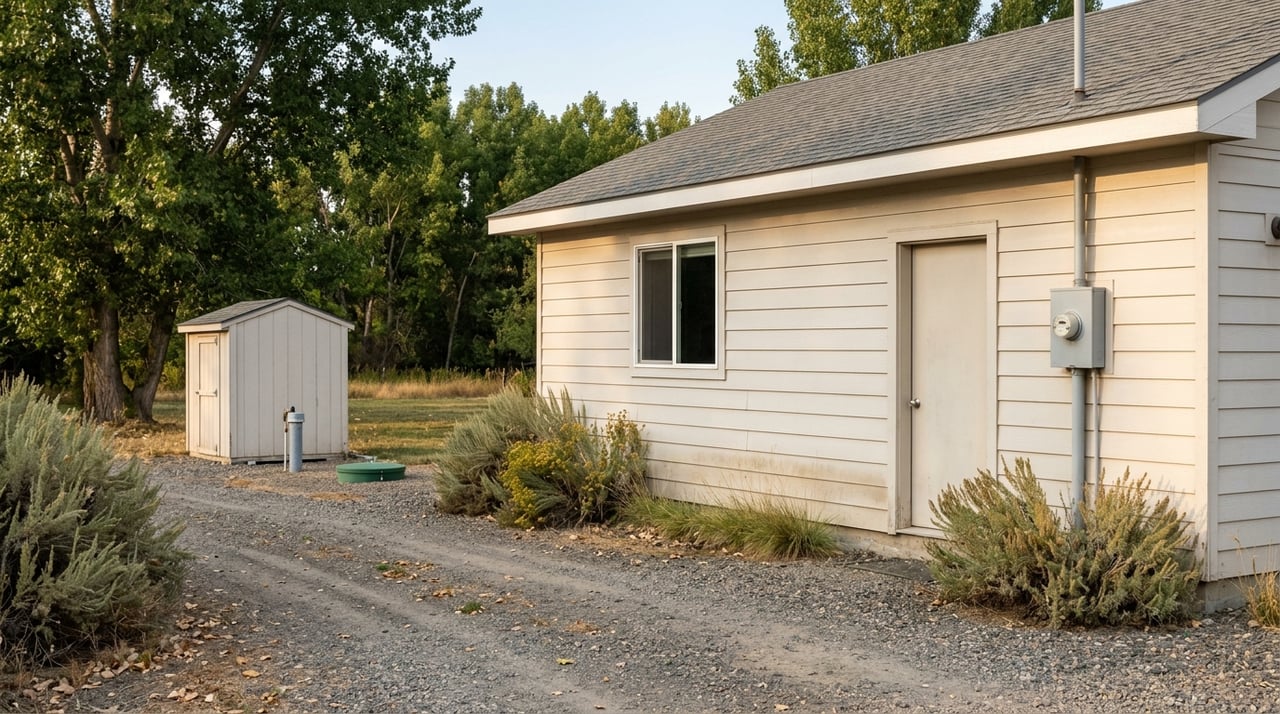
Key Things to Check Before Buying Acreage Near Moses Lake
April 2, 2026
April 2, 2026
Dreaming about a few acres, a shop, maybe some animals, and room to breathe near Moses Lake? Rural property can offer a lot of freedom, but it also comes with details that can change what you can build, how you get water, and what the land will realistically support. If you are thinking about buying acreage or a hobby farm near Moses Lake, this guide will walk you through the biggest issues to check before you commit. Let’s dive in.
Before you fall in love with a property, confirm whether it sits inside Moses Lake city limits or in unincorporated Grant County. That matters because permits, utility options, and land-use rules can differ depending on jurisdiction. In unincorporated areas, the Grant County Building Division handles permitting, and the county notes that some parcels may exist for tax purposes but still are not buildable.
Zoning is one of the first items to verify. In Grant County, the Agricultural zone is designed to keep land in farming use and supports uses tied to crop agriculture, livestock maintenance, irrigation facilities, and certain agricultural-related businesses, according to the county zoning code. If you are planning a barn, animal setup, second dwelling, or small farm-based business, do not rely only on listing remarks. Confirm whether that use is allowed outright, requires review, or needs a conditional approval.
A rural parcel may look perfect on paper, but lot standards can affect whether your plans work. Grant County development standards show 5-acre minimums in AG and RR1 zones, 20 acres in RRem, 40 acres in several resource and open-space districts, and a minimum of 50 feet of frontage along any county road, based on the county development standards.
That means size alone is not enough. You also want to know whether the property has the required road frontage, whether it can be accessed legally, and whether the existing parcel configuration supports a home site, outbuildings, or future plans. These details can make a big difference in how usable the land really is.
In Grant County, water is not a side issue. It is central to the value and function of acreage, especially in a region that receives less than six inches of precipitation a year. If you are buying land for gardening, animals, pasture, or any kind of hobby-farm use, you need to understand the property’s water source before moving forward.
If the property uses a private well, ask for well information early. The Washington State Department of Health recommends annual testing for coliform bacteria and nitrate, and it notes that counties or lenders may require water sampling when a home with a private well is bought or sold. You can also review available construction details and production history through Ecology’s well log tools and guidance and the Department of Health’s water testing guidance.
If you are buying vacant land and planning to drill a new well, there are rules to know up front. Ecology requires a Notice of Intent at least 72 hours before drilling, and that filing is not the same as a water-right permit. Ecology also states that a water right is required if planned use exceeds 5,000 gallons per day or irrigates more than one-half acre.
A green field or productive ground does not automatically mean you are getting usable irrigation water. Grant County warns that if a parcel includes irrigation water or surface water rights, buyers should not assume the deed alone gives them usable water. The county explains that water rights may involve coordination with Ecology, a water district, or the Bureau of Reclamation, and that surface-water use requires a water-right certificate.
This is especially important in an area influenced by the Columbia Basin Project, which the Bureau of Reclamation says serves about 671,000 acres in east-central Washington through a major irrigation network. If irrigation matters to your plans, get clear answers on the source, transferability, delivery method, and actual use rights before closing.
For rural homes and vacant parcels outside city sewer service, septic review is a must. The Grant County Health District permits and inspects on-site septic systems under 3,500 gallons per day, maintains records of existing systems, and requires site plans to show both septic components and the well. It also says new septic applications under county authority cannot be accepted until a county building permit has been applied for.
Rules are changing, so it helps to look beyond whether a system simply exists. Grant County Health District says current on-site septic system rules took effect April 1, 2025, and the Department of Health says property-transfer inspections become a statewide requirement starting February 1, 2027. Even now, it is smart to review permit history, tank age, drainfield location, and maintenance records before you buy.
Many buyers focus on the home, the view, or the acreage count. In rural areas, access can be just as important. Grant County notes that many rural properties rely on private access roads, that the county only maintains county roads, and that some roads are not maintained year-round, according to its access guidance.
If access crosses someone else’s land, you need to understand the easement and whether it is legally recorded and practical to use. The county also warns that easement situations can create legal issues. This is one of those details that may not feel urgent during a showing, but it can affect financing, use, and future resale.
Grant County advises buyers to review easements carefully because they may allow roads, canals, power lines, water lines, or sewer lines across the property. The county also notes that fences and plats should not be treated as proof of exact property boundaries unless the land has been surveyed and recorded, as outlined on The Property page.
If the parcel takes access from a state highway, another layer may apply. Grant County says a new access or a change of use requires Washington State Department of Transportation approval, and it also notes that canal and irrigation operation-and-maintenance roads are not for public use, based on the county’s permit information.
Some acreage near Moses Lake may have easier access to services than you expect. The City of Moses Lake utility service page explains that the city provides water, sewer, stormwater, and garbage service within its service area, but a connection review may involve fees, covenants, extra-territorial agreements, and possibly a street-and-utility construction permit.
For more rural properties, the better question is often not just whether utilities exist nearby, but whether they can be brought to the site at a cost that still makes the purchase make sense. Grant PUD provides electric service to more than 40,000 customers and has built a fiber-optic network across Grant County, but actual availability and extension costs are location-specific. If you are buying vacant land, this is worth checking before you assume the site is ready to build.
Acreage can be peaceful and practical, but rural life here comes with conditions you should expect. Grant County advises buyers in agricultural areas to be prepared for dust, smoke, manure odors, nighttime harvest activity, crop-duster traffic, chemicals, noxious weeds, and livestock safety issues, as described on the county’s agriculture page.
That does not mean rural property is a bad fit. It simply means you want to buy with open eyes. If your goal is a small hobby farm or country lifestyle, understanding these normal conditions can help you choose the right location and avoid surprises after move-in.
Not every acreage property is a wide-open blank slate. Depending on location, environmental and development overlays may affect what you can do. Grant County’s critical areas code covers wetlands, frequently flooded areas, critical aquifer recharge areas, geologically hazardous areas, fish and wildlife habitat conservation areas, and cultural resource areas, and review may be required as part of permits or land division.
If the property is near Moses Lake, Blue Lake, or the Columbia River, shoreline rules may apply too. Grant County states that these are shorelines of statewide significance and that shoreline jurisdiction generally extends 200 feet landward from the ordinary high-water mark. The county’s shoreline development guidance says permitting may be required for construction, vegetation removal, septic systems, docks, trails, and change of use.
Floodplain status is another item to check early. Grant County participates in the National Flood Insurance Program and requires a floodplain development permit for construction or development in a FEMA special flood hazard area.
If you are buying a hobby farm or productive acreage, taxes may be part of the conversation. Washington’s Open Space Taxation Act allows qualifying farm and agricultural land to be taxed on current use rather than highest and best use, according to the Washington Department of Revenue’s current-use classification guidance.
This can be helpful, but you should verify whether the parcel is currently enrolled, whether it qualifies going forward, and what happens if land use changes after closing. For farm and agricultural land, parcels from 5 to under 20 acres may need to meet gross-income thresholds. The Department of Revenue also notes that as of September 1, 2025, the additional tax period for withdrawals or removals was reduced from seven years to four years.
Before you buy acreage or a hobby farm near Moses Lake, try to confirm these points:
Working through this list early can save you time, money, and frustration. It also helps you focus on properties that fit your goals instead of chasing land that looks good online but does not work in real life.
Rural properties often involve more moving parts than an in-town home. You may be sorting through zoning language, septic records, access questions, and utility logistics all at once. Having someone local who understands how acreage transactions work in Moses Lake and across Grant County can help you ask better questions and spot issues earlier.
If you are thinking about buying acreage or a hobby farm near Moses Lake, Medie Ruiz can help you evaluate the property beyond the photos and acreage count. With deep local experience across Moses Lake and surrounding Grant County communities, Medie offers practical, hands-on guidance so you can move forward with more clarity and confidence.
Stay up to date on the latest real estate trends.

Medie Ruiz is dedicated to helping you find your dream home and assisting with any selling needs you may have. Contact him today for a free consultation for buying, selling, renting, or investing in Washington.